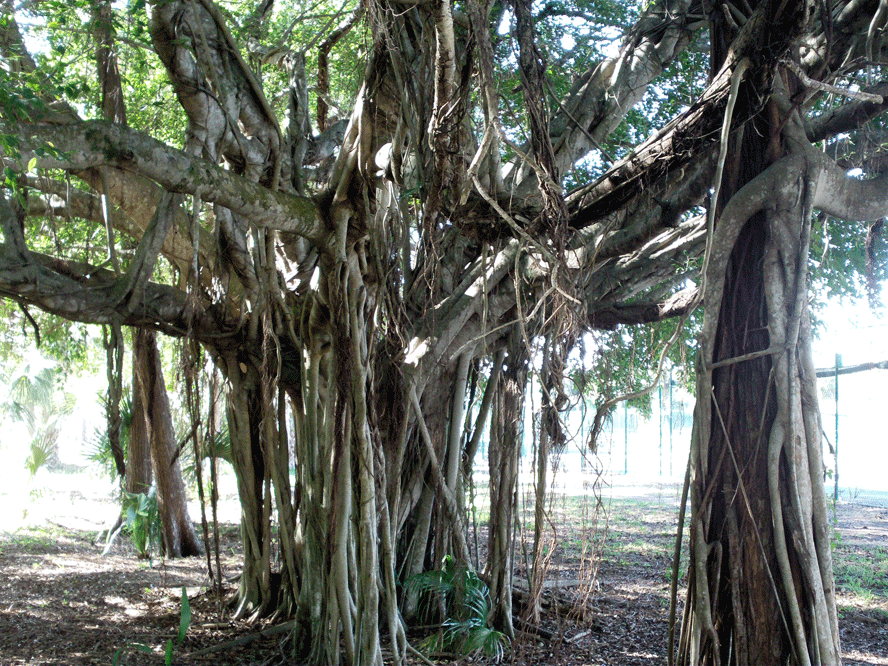


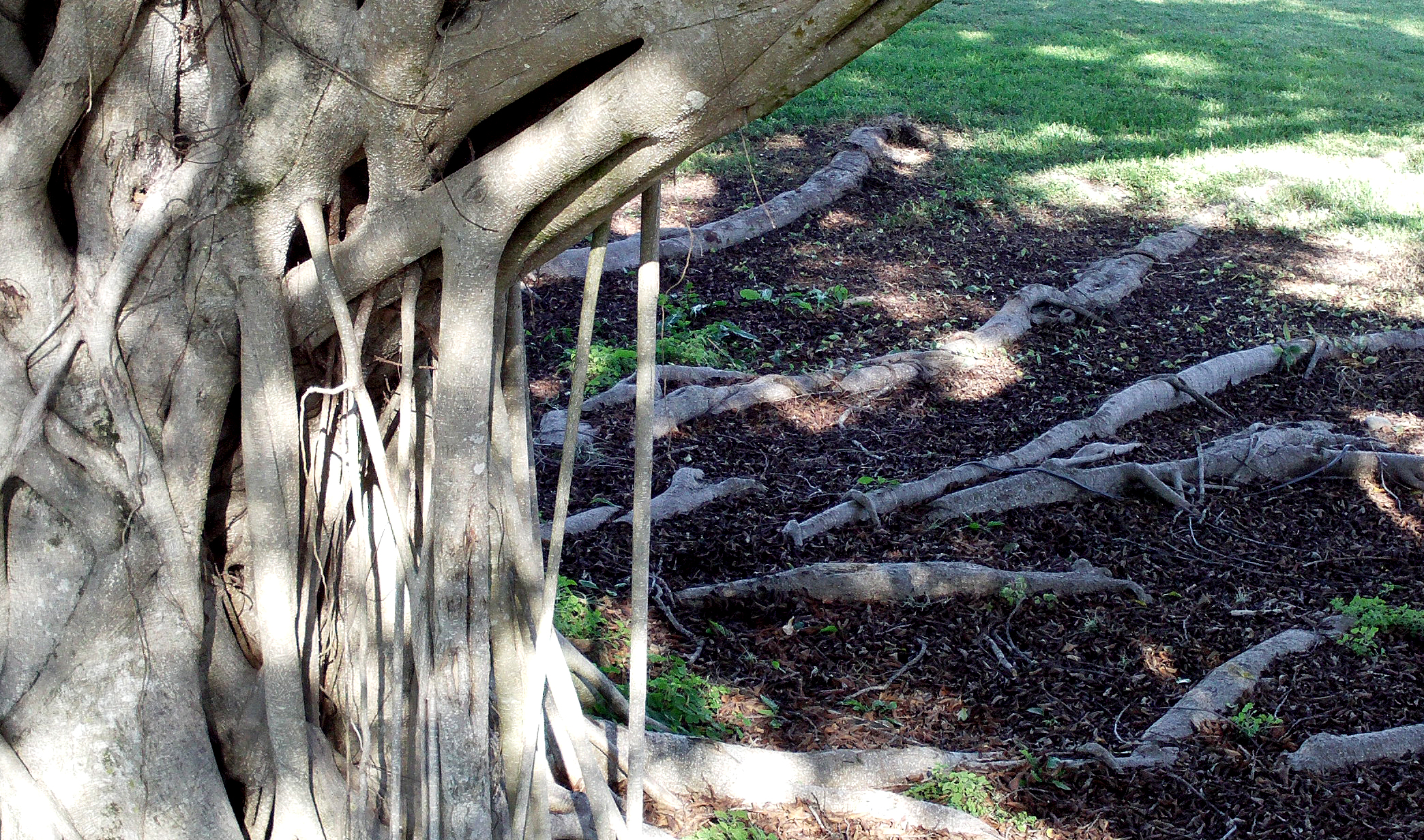
A banyan (बरगद) tree, native to India and part of the Mulberry family, is an enormous tree with many uses and a vast history. In Hindu mythology, the banyan tree is also called Kalpavriksha meaning ‘wish fulfilling tree’. It represents eternal life because of its seemingly ever- expanding branches and people have great respect for it.
The banyan tree is also used for medicinal purposes. The sap treats external skin inflammations and bruising. The bark and seeds are used as a tonic to cool the body, as well as to treat patients with diabetes. The roots and sap are used to treat skin ulcers, dysentery, and toothaches.
Banyan trees have a variety of uses. They produce a special type of rubber, and their sticky milk is used in gardening. The most outstanding characteristic of the banyan is the fact that it frequently germinates in another tree and drops its roots down to the ground.
Many years ago, in fact so many years that no one remembers if it was hundreds or thousands of years or even longer, a group of village wise men had a debate on the merits of the Banyan Tree.
 “This tree,” the first man said, “its wood won’t burn, it can’t be used to make a fire.”
“We can’t make tools from it either,” said another.
“The wood is too porous.”
“The fruit is dry, too bitter to eat,” complained the fat one.
“And just see how big it is! Takes up too much space in the village,” they went on and on.
“For man,” they insisted, “this tree is absolutely useless!”
Then the wisest of the wise men pondered over the question.
At last he said, “It seems to me that this useless Banyan tree must be a very special tree. If it is absolutely useless for man – then it must have been created for the Gods!”
“Ah ah! Ama! True wisdom! No problem!” they all agreed.
And ever since that day the Banyan Tree has been sacred and taken care of for the Gods.
